Five things UK contractors told us about tender planning
Heads of planning at UK contractors on what slows tender schedules down, from reading the pack and planning capacity to late supply chain input.
Written by
Stacey Gray
Believes the world's biggest projects deserve better than guesswork. Powered by customer stories, products that solve real problems, and the occasional gelato.
Key takeaways: UK tender planners lose the first weeks of a tender to reading, run more live bids than their teams can cover, pay a premium for freelance help that often needs rework, and hear from the supply chain too late to act on it. What they want is a faster route to a first draft that follows their own standards and leaves the final call with their planners.
Planning teams rarely tell me the logic is the hard part of a tender. This year we've spoken with heads of planning, tender planners and planning managers at contractors across the UK, from some of the country's largest infrastructure and building contractors to regional specialists, and these are some of the most experienced people in their businesses. What wears them down is everything that has to happen before and around the logic, and the same five issues came up so often that I wanted to share them.
SCHEDULE STUDIO · FIRST DRAFT IN HOURS
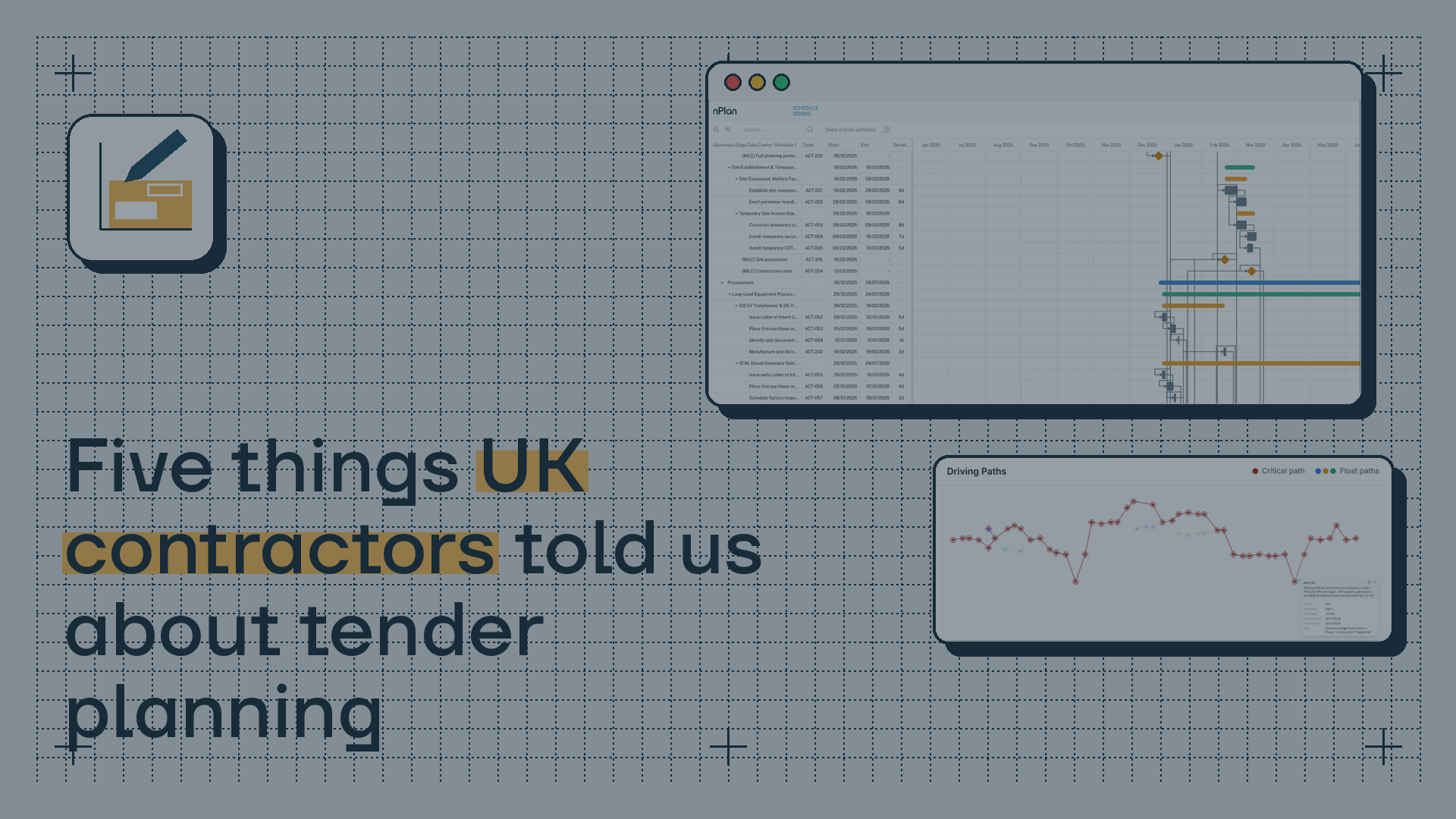
Upload your tender documents and generate a logic-linked first draft schedule that your planners review, refine and export to P6 or Asta.
Anyone who has worked in a bid team will recognise how a tender starts: the pack arrives, often in more than one batch, and someone has to read hundreds of pages of specifications, drawings, employer's requirements and site information before a single activity goes into P6 or Asta. A planning team at one of the UK's largest infrastructure contractors told us their first week goes on reading and the second on understanding the scope, so activities only start going in during week three.
Every planner we spoke to sees that reading as essential, and a head of planning at a major UK building and civil engineering contractor put it best when he said the planner needs to read everything, because only once you know it do you know you don't need it. On a four or five week tender, though, a large share of the period has gone before the schedule exists.
2. Planning capacity decides which bids a business goes for
Tender volumes rarely arrive evenly, and clients often release work later than they said they would, so a planning team can move from comfortable to overloaded in a matter of weeks. The same head of planning told us his team carries up to 16 live tenders at its busiest and pulls site planners off live projects to help. When that capacity runs out, the business has to turn down work it would otherwise have bid for. Of everything I heard, that stayed with me most: good work going unbid because there were no planners free to build the schedule. Industry data points the same way: in Gleeds' Q1 2026 survey, 85% of firms said they or their supply chain had turned down tenders during the quarter.
3. Freelance cover is expensive and often needs rework
When volumes peak, most teams bring in extra planners, and it rarely comes cheap. The lead planner at a highways contractor told us they pay £550 to £600 a day for freelance tender planners, and that first drafts from outside the business often get rebuilt in-house because they don't reflect how the team builds. In one case, a consultant booked for six weeks still hadn't delivered by week four, and he finished the schedule himself.
"Adding people works in a pinch, but good planners are scarce and the budget to keep hiring them usually isn't there, so it struggles to scale when you want to chase more bids."
Ben Koops, AI Project Controls Consultant at nPlan
4. The supply chain comes in late
A tender schedule depends on people outside the planning team, and subcontractors most of all, so the later the first draft exists, the later those conversations start. A planning manager at one of the UK's largest infrastructure contractors described a subcontractor coming back with 25 days for an activity the team had assumed would take 15. A difference like that is easy to absorb when it surfaces in the first week of a tender, and much harder to deal with a few days before submission. The planning leads we spoke to were clear that they want a working draft early enough to send out enquiries on packages such as piling, steel frame and cladding, and still have time to act on the replies.
5. Experienced teams want their own standards and the final say
Many of the contractors we spoke to have built up their own WBS conventions and duration data over years, and some treat that data as a real competitive advantage, while others were candid that their rates are several years old and due for review. Whichever camp they were in, they wanted a faster route to a first draft they could shape themselves, with their own planners making the final call on what goes to the client.
How to reduce the time it takes to build a tender schedule
Every one of these issues comes back to how a tender's time gets used, and how little of it is left at the end for testing alternatives and getting the logic right.
We built Schedule Studio to give planning teams that time back, so it reads your tender documents, lets you check the scope, WBS and milestones it has extracted, and builds a logic-linked first draft that your planners can refine, test and export to P6 or Asta. You can upload one of your own past schedules as a reference so the draft follows your team's structure, coding and durations, and every activity remains yours to change.
By clicking “Accept all”, you agree to the storing of cookies on your device to enhance site navigation, analyse site usage, and assist in our marketing efforts. Find more information on our use of cookies here.