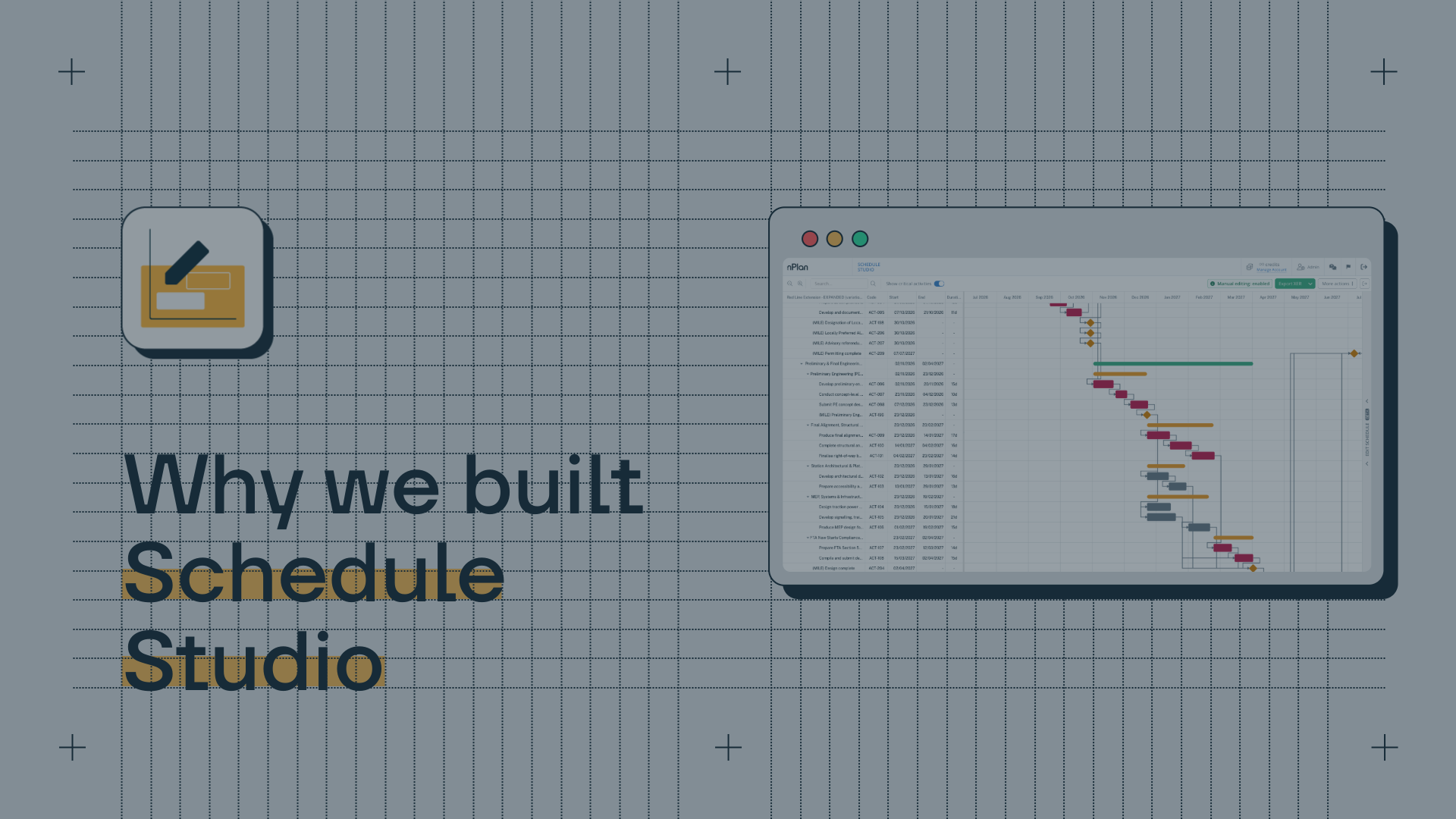
Why we built Schedule Studio
Building a construction schedule from scratch can take weeks, but it shouldn't. Here's why we built Schedule Studio, and what we think planners and schedulers should be doing with the time they get back.

The short version
Building a construction schedule from scratch takes weeks, but it shouldn’t. We had the dataset to change that, so we did.
Key takeaways
- Building a schedule for a large construction project from scratch is weeks of manual work - interpreting hundreds of pages of documents, structuring the WBS, sequencing activities, and that’s before any real planning judgement has been applied
- That time cost is the problem Schedule Studio was built to solve - not because planners and schedulers lack skill, but because the creation phase shouldn’t consume the expertise that makes a schedule good
- nPlan’s forecasting AI is trained on 750,000+ historical schedules - that dataset is what makes it possible to generate a credible, logically linked schedule in a fraction of the time
- Schedule Studio gets you to a credible V1 in a fraction of the time, so planners and schedulers can focus on refinement, scenario planning, and the decisions that actually require their expertise
nPlan started with a straightforward idea: the data inside historical construction schedules could produce better project forecasts than human expert opinion alone - not because experts aren’t skilled, but because human forecasting on large projects is influenced by optimism, politics, and sometimes the pressure to say yes. Data-driven forecasting removes that bias.
That idea holds up. Trained on over 750,000+ historical schedules, our AI has helped some of the world’s largest capital programmes, including Shell, ExxonMobil, Chevron, National Grid, and Anglian Water, understand where their schedule risk is actually coming from, and what to do about it.
The problem facing schedulers and planners
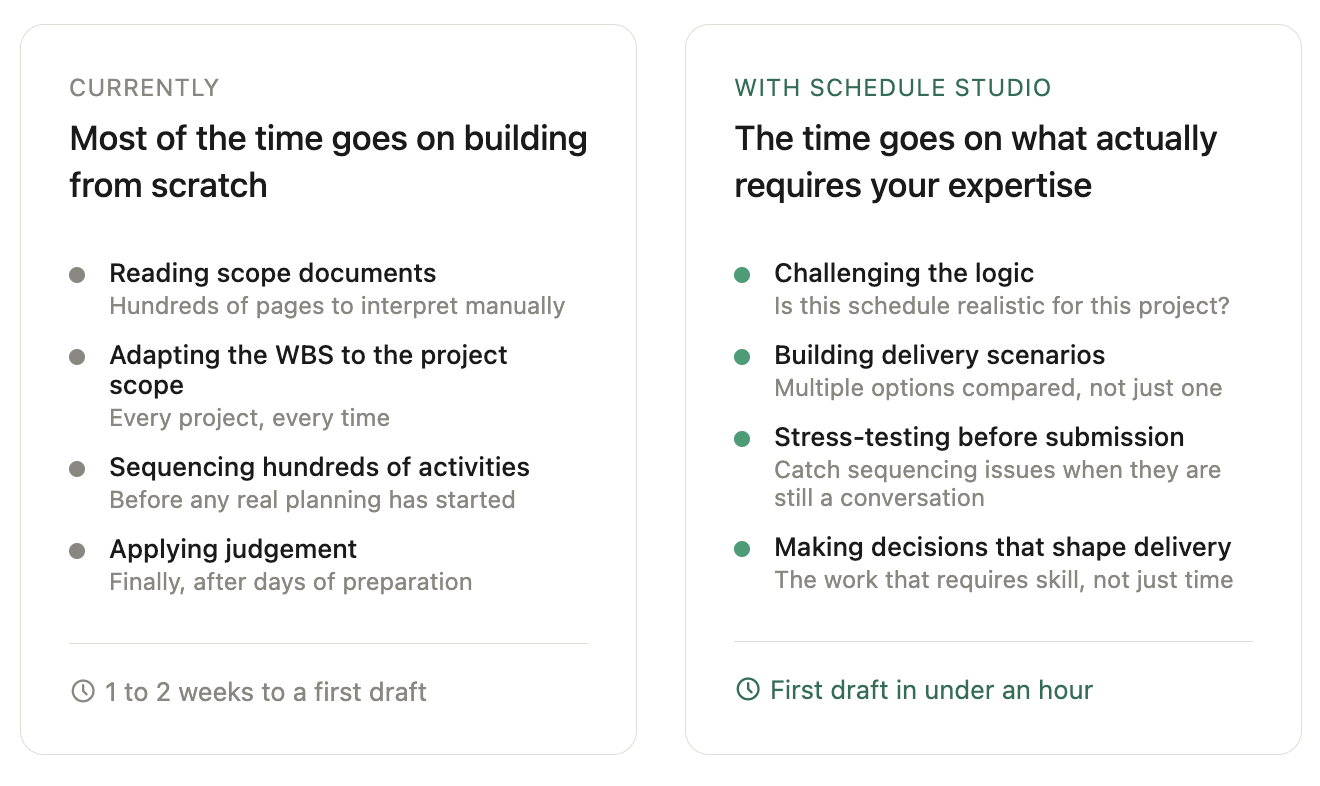
The pain points of construction planners and schedulers are well known. Building a schedule for a large construction project from scratch is, in most cases, weeks of manual work. A planner or scheduler starts with a blank page, works through hundreds of pages of scope documents, structures the WBS, sequences hundreds of activities, and produces a schedule that reflects how the work will actually be delivered - before any real planning judgement has even been applied.
That’s not a skills problem, it’s a conditions problem, and it means that the people best placed to challenge a schedule, explore delivery options and make decisions that shape how a project is delivered are spending most of their time on the creation phase instead.
At nPlan, we clocked up a lot of hours speaking to the planners and schedulers who build these schedules. We understood their problem, and we had something that made it possible to do something about it: the largest construction schedule dataset in the world, built from 750,000+ real projects across every capital sector.
No one else had that, and it made solving the blank page problem possible in a way that it simply wasn’t for anyone else.
What planners and schedulers do with the time
What Schedule Studio gives back isn’t just time, it’s the right kind of time.
Instead of spending two weeks getting to a first draft, a planner or scheduler can now spend that time perfecting the schedule. That means building multiple delivery scenarios and comparing them. It means stress-testing the logic before a schedule goes to a client or contractor. It means catching sequencing issues early, when they are a conversation, rather than late, when they are a dispute.
It also means something harder to quantify: doing the work that actually requires their expertise. The judgement calls, the scenario planning, the decisions that shape how a project is delivered. The parts of the job that require actual skill rather than just a whole lot of time.
With Schedule Studio, better schedules lead to better decisions - and for the people who build them, more time for the work that actually matters.
Schedule Studio is available now. Try it for free here, or get in touch with our team to find out more.


.jpg)


